

The rise of pocket-sized, context-aware Screenless AI devices is redefining the next wave of consumer technology. Following OpenAI’s acquisition of Jony Ive’s startup io and Meta’s push into wearables, the market is quickly shifting toward tools that prioritize voice interaction and ambient sensing over traditional screens.
This section previews a category that aims to offload routine tasks from phones and computers. It highlights real advances—sub-400 ms voice latency, near-human motion sensing—and notes risks shown by the Humane AI Pin. Readers will see why a small product that understands context could reclaim human attention and reduce friction in daily life.
Key Takeaways
- OpenAI’s purchase of io and Meta’s wearables push the speed of a new device category.
- Voice and motion sensing promise faster, hands-free interactions than screens.
- Early failures show the market must solve scale, privacy, and performance.
- A context-aware product could shift how people access assistance in the future.
- Execution risk and hardware readiness will shape realistic 2026 timelines.
Screenless AI Today: The State of the Device Race

A new generation of pocket companions is forcing companies to rethink how people get help without opening an app.
OpenAI and Jony Ive are building a pocket-sized device that intentionally avoids a display. Reports describe an iPod Shuffle-like form that rests in a pocket or on a desk and interoperates with existing gadgets rather than replacing a smartphone.
Meta counters with investments in smart glasses, AR/VR, and wearable research that put signals near the eyes and ears. That approach offers immediate cues, but it also brings trade-offs in comfort and the limits of putting screens close to the face.
New hardware advances — faster voice latency under 400 ms and motion sensing that nears human perception — are forming the technical pillars of a post-screen user experience. Yet the Humane AI Pin’s missteps remind the industry that battery life, heat, and reliability are table stakes.
Design without screens shifts the burden to tone, timing, and brand behavior. Companies now must shape how a device speaks, when it interrupts, and how it preserves privacy to earn everyday trust.
- Form factor: pocket companion vs. glasses trade-offs.
- Technical pillars: responsive voice, motion detection, and dependable hardware.
- Market reality: scale ambitions face privacy, personality, and compute hurdles over time.
| Player | Approach | Key challenge |
|---|---|---|
| OpenAI + Jony Ive | Pocket, no-screen device | Hardware scale and device personality |
| Meta | Smart glasses and wearables | Comfort, display limits near eyes |
| Other makers | Comfort, display limits near the eyes | Battery, heat, real-world reliability |
Screenless AI Features and Design: What the New Devices Promise
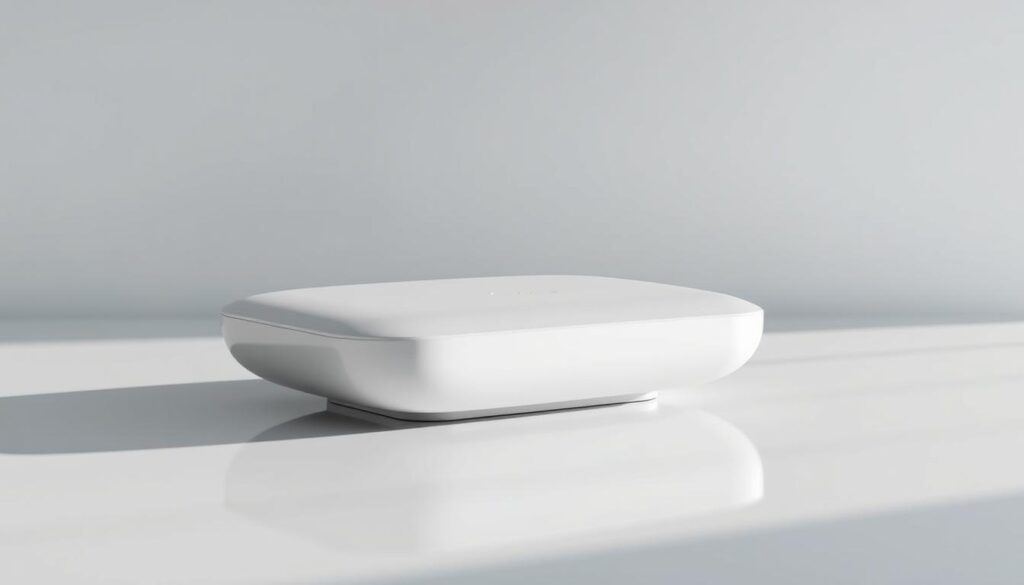
Compact companions aim to move routine tasks out of sight and into natural speech. The next devices combine discreet form, sensors, and fast voice to act as a proactive layer that augments phones and laptops.
Form factor and hardware
Early descriptions point to a pocket-sized, iPod Shuffle-like device that is not a phone and not glasses. The compact hardware balances portability with always-on sensing.
Sensors and context
Built-in microphones and cameras help the device understand who is speaking, where the user is, and what is happening. That ambient context lets responses feel grounded in the moment.
Voice-first experiences
Voice systems like Synthflow deliver sub-400 ms responses so conversation feels natural. Advances in intonation and turn-taking reduce friction versus older assistants.
Motion detection and interoperability
Near-human motion sensing enables gestures and scene-aware actions. The device is designed to work with a smartphone and computer, using them for heavy lifting while offering timely, hands-free help.
- Benefits: discreet assistance, natural conversation, and ecosystem reach.
- Trade-offs: battery life, noisy environments, heat, and reliable connectivity.
| Feature | What it enables | Key risk |
|---|---|---|
| Form factor | Portability and discretion | Limited screen UI |
| Sensors | Context-aware responses | Privacy and accuracy |
| Voice latency | Natural conversation | Network and compute limits |
| Motion sensing | Hands-free control | False positives |
Benefits, Market Impact, and What’s Coming in 2026
A conversational pocket gadget could change how families divide attention between people and screens. It promises to reduce time spent on phones and restore more natural, in-person talk.
Human attention and family life
The clearest benefit is reclaiming attention. A device that speaks and listens removes the lure of feeds and reduces screen time in evenings and weekends.
Parents can use these devices for reminders, quick lookups, and routine tasks. That keeps family moments focused and less interrupted by visual notifications.
Market realities
Expectations are high: OpenAI and Jony Ive have discussed an ambitious number of units shipped. But hardware is a scale business.
Lessons from the Humane pin show risks: battery drain, heat, and weak use cases can stall adoption. Supply chains and retail execution will decide real market success.
Timeline watch for 2026
The 2026 target is plausible but conditional. Success hinges on device personality, robust privacy controls, and dependable infrastructure for inference.
Pricing and integration will shape mainstream acceptance. A fair entry price and clear time savings could help normalize a new category that complements phones and PCs.
- Benefit: Less visual distraction, more conversational productivity.
- Risk: Hardware limits, privacy, and unreliable outputs.
- Opportunity: If trusted, devices can shift daily habits toward presence.
| Topic | Upside | Main hurdle |
|---|---|---|
| Family attention | Reduced screens, more conversation | User habits and pricing |
| Market scale | Large addressable market | Supply chain and support |
| Launch timing | 2026 target catalyzes investment | Personality, privacy, cloud reliability |
Conclusion
A new product class will win by helping without asking for constant attention. Devices that blend into routines can save people time and protect human attention. The best products pair thoughtful design with robust hardware and sensible privacy defaults.
There is more than one way forward: pocket companions, smart glasses, and other form factors will compete. Success depends on the full tech stack—microphones, compute, integration with smartphones, and consistent experiences.
If teams ship at scale and learn fast, the future could shift away from launching apps toward ambient support that feels natural. Families may get calmer evenings as screens become optional and assistants quietly handle routine tasks.
FAQ
What is a screenless AI device, and how does it differ from a smartphone?
A screenless device removes or minimizes the visual display and relies on voice, audio, haptics, and sensors to deliver information. Unlike a smartphone, it focuses on conversational and ambient interactions rather than touch-and-look tasks. It often pairs with phones and computers to extend functionality while reducing visual distraction and screen time.
Who is building these devices, and what companies lead the market?
Major tech firms and hardware startups are active in this space. OpenAI and designers influenced by Jony Ive have proposed pocket-sized, conversation-first gadgets. Meta continues to push smart glasses that keep displays near the eyes and ears. Other firms focus on wearable pins, wristbands, and gesture-sensing hardware to provide different form factors.
What hardware features should consumers expect?
New devices emphasize compact form factors, lightweight materials, and robust sensors. Expect multiple microphones, low-power cameras for context detection, motion sensors for gesture recognition, and high-quality speakers for natural voice. Battery life and privacy controls are also central design priorities.
How do voice-first experiences perform in real conversations?
Voice-first products aim for sub-400 ms latency to support natural turn-taking, realistic intonation, and minimal lag. Improvements in on-device processing and cloud-assisted models help maintain conversational flow. The goal is to make interactions feel like talking to a person rather than issuing commands.
Will Screenless AI devices replace smartphones and tablets?
They are unlikely to fully replace phones and tablets soon. Instead, they complement existing devices by handling short, hands-free interactions and reducing screen dependence. Interoperability ensures phones and computers still handle complex tasks like editing, gaming, and rich media.
How do motion detection and gesture controls work?
Motion detection combines accelerometers, gyroscopes, and computer vision to interpret gestures and wrist movements. Devices range from pins to wrist-worn bands that sense subtle motion, enabling quick commands or contextual triggers without touching a screen.
What privacy and security measures are typical?
Manufacturers design privacy into hardware and software through local processing of sensitive signals, explicit indicators when cameras or microphones are active, encrypted communication with paired devices, and granular user controls. Transparency about data use and on-device options help address privacy concerns.
How will these products affect family life and attention span?
By reducing visual screen time, these devices aim to restore more natural conversation and presence in family settings. They can lower distractions from constant notifications and encourage voice-driven interactions, though success depends on thoughtful product behavior and norms around use.
What are the main market challenges ahead?
Scaling production, creating compelling use cases, and proving real-world reliability pose major hurdles. Past missteps, such as early product launches that overpromised, highlight the need for solid hardware, clear privacy practices, and realistic marketing to win mainstream adoption.
When will mainstream screenless devices reach the market?
Companies have targeted rollouts around 2026 for more polished devices. Timelines depend on advances in sensors, battery tech, network infrastructure, and regulatory approval. Early adopters can expect prototypes and limited releases sooner, with broader availability following.
How do design and brand tone matter without a screen?
Design extends beyond hardware to include the product’s personality, empathy, and behavior in interactions. Tone of voice, response timing, and subtle cues replace visual branding. Thoughtful sound design and conversational style become critical elements of product identity.
Can these devices work offline or without a phone connection?
Many devices offer some offline capabilities for basic voice commands, local sensing, and privacy-preserving features. For advanced tasks, cloud services or a paired phone/computer usually provide heavier processing, extended knowledge, and seamless synchronization.
What role does interoperability play with existing tech ecosystems?
Interoperability ensures these devices integrate with smartphones, tablets, and computers to extend workflows rather than fragment them. Standard protocols, companion apps, and APIs enable shared notifications, media control, and continuity between devices.
Are there accessibility benefits to screenless products?
Yes. Voice and gesture interfaces can improve access for people with visual impairments or mobility limitations. Natural language interactions and haptic feedback offer alternative ways to receive information without relying on a visual display.
How will pricing and market scale evolve?
Early devices may command premium pricing due to specialized hardware and research costs. Over time, economies of scale and broader adoption could push prices down, with some companies aiming for mass-market volumes measured in tens of millions of units.
Also Read This:-
How AI in Photography Is Changing the Way We Capture and Edit Photos
Best Free AI Tools for Digital Marketing Beginners in 2026
AI in Agriculture: How Smart Technology Is Transforming Farming