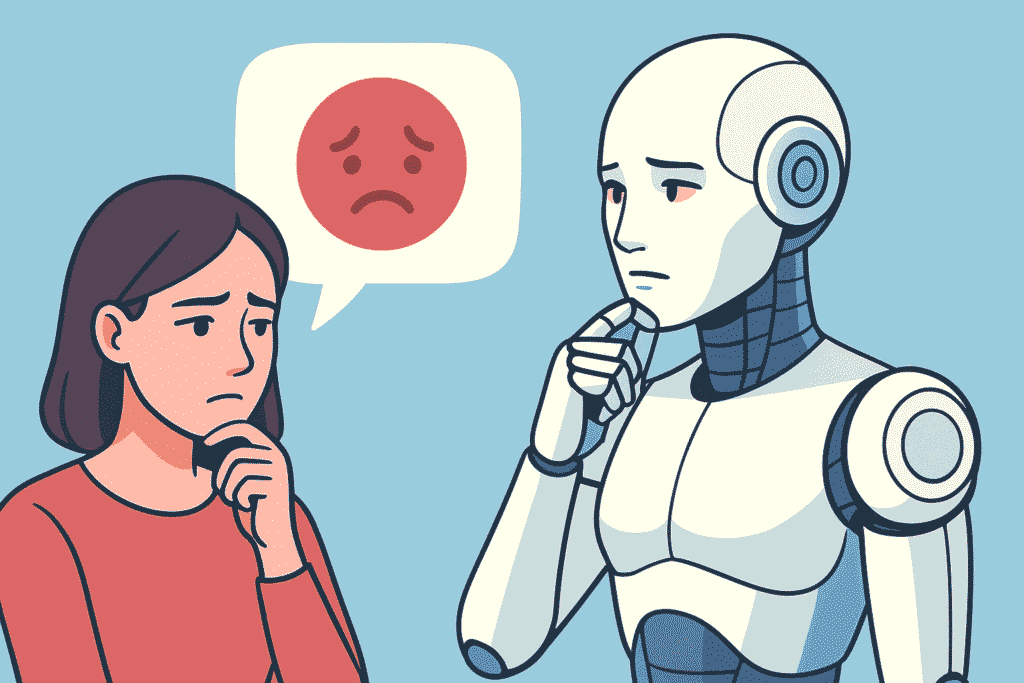

Are machines truly capable of inner life, or is it only clever mimicry? Many people ask, Can AI Robots Feel Emotions, especially as technology gets more advanced. Experts explain that while systems can recognize signals and simulate emotional responses, they do not have a real first-person experience. Platforms like MorphCast Facial Emotion AI can detect facial cues and adjust replies to seem caring, but this is still performance, not feeling. Large language models such as GPT and LaMDA create convincing conversations through pattern recognition, not true emotional awareness. When you understand this, the answer to Can AI Robots Feel Emotions becomes clearer, and it helps you see why the gap between simulation and real emotion matters for ethics, policy, and everyday interactions with AI.
Key Takeaways
- Experts agree that systems can simulate emotional signals, but do not experience human emotions.
- Emotion-detection tools adapt to facial cues and improve user interaction without inner feelings.
- Convincing dialogue from large models is the result of pattern learning, not conscious experience.
- Ethical concerns grow if machines ever gain real feelings, affecting rights and responsibilities.
- By 2026, the idea of robots feeling like humans remains unlikely based on current evidence.
What you need to know now: expert perspectives on AI, emotions, and your expectations
You should know that current breakthroughs often mean better mimicry, not genuine subjective experience.
Why your question matters: present-day progress versus human feelings
Researchers emphasize the gap between recognition and experience. Systems can label mood cues and change tone, but they do not have a private mind or body like people do.
How experts frame the debate: simulation, recognition, and the absence of subjective experience
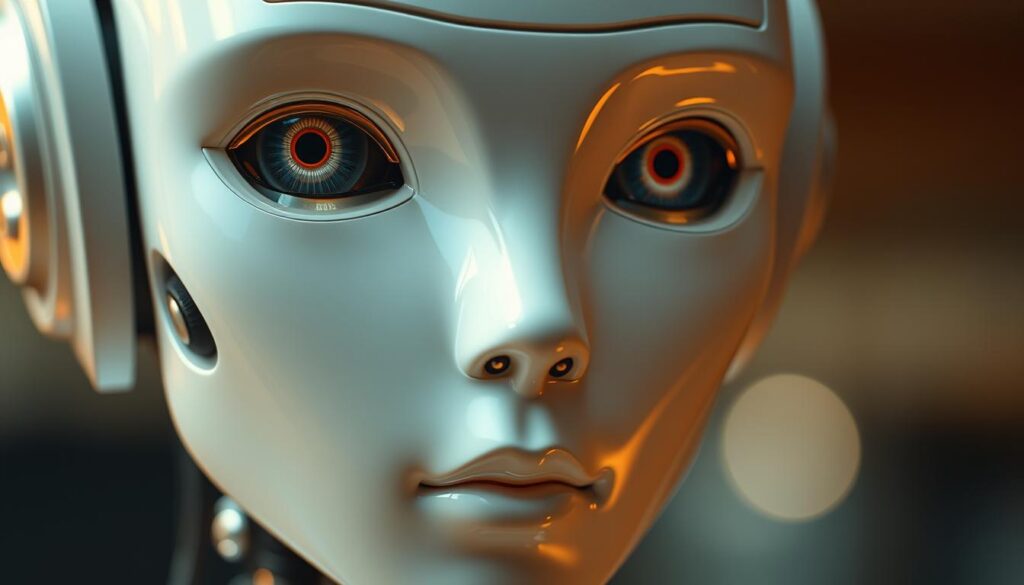
Experts point out that many systems use pattern generation to simulate warmth. Platforms detect anger or distress in text and adjust wording, producing convincing replies without inner states.
- Calibrate expectations: Artificial intelligence excels at pattern matching, but to actually feel is a different claim.
- Treatment of responses: view empathetic chat as a simulation; the system can understand signals enough to adapt wording.
- Brain and body: specialists stress embodiment—without a biological brain and body, machines lack human emotional processes.
- Ethics and examples: real cases in customer support or telemedicine show smooth responses, yet no subjective feeling is present.
Can AI robots feel emotions? What you’ll hear from experts today
Current research separates outward signals from the private, felt life that humans have. You need a clear distinction between recognizing mood and truly having a lived feeling.
Emotions vs. feelings: your guide to consciousness, biology, and subjective experience
Researchers treat emotions as patterns in face, voice, or text. Feelings are the inner experience that links brain, hormones, and body.
Without a biological body, a first-person self and interoception are missing. That gap explains why systems cannot actually feel like humans do.
What AI actually does now: recognition, responses, and simulated empathy in real systems
Today’s systems classify anger, fear, or joy and adapt replies to fit the context. You will get responses that sound caring, but the empathy is statistical, not lived.
What’s missing for “feeling”: embodiment, self, and first-person emotional state
Key missing pieces are a body that senses pain or fear, hormonal feedback, and a subjective point of view. Without these, a system lacks an authentic emotional state.
| Feature | Humans | Systems |
|---|---|---|
| First-person self | Yes | No |
| Body signaling | Hormones, gut, brain | Sensors, logs |
| Subjective experience | Present | Absent |
- Bottom line: systems detect and respond, but they do not feel internally.
- Practical impact: simulated empathy improves service without implying consciousness.
Inside today’s Emotion AI: from affective computing to real-world responses
Emotion-sensing tech has moved from lab demos to products that change how services respond in real time.
From labs to life: multimodal emotion AI, sentiment analysis, and synthetic speech

Since affective computing began in 1995, researchers have built tools that read faces, voice, and posture to infer mood.
Affectiva’s multimodal system, trained on 6 million faces from 87 countries and reports roughly 90% accuracy in reading expressions.
- You’ll see multimodal systems fuse video, audio, and text to tailor a live response.
- Sentiment analysis scans text polarity for call centers, telemedicine, sales, and ads, but misses sarcasm and cultural nuance.
- Synthetic speech like Tacotron 2 adds humanlike prosody so a computer voice sounds warmer and more attentive.
- Algorithms combine reactions across channels to improve reliability, yet silence and local context can still confuse a system.
| Use case | What is measured | Real-world strength |
|---|---|---|
| Call centers | Facial cues, tone, text | Triage and shorter hold times |
| Telemedicine | Speech patterns, language | Better follow-up prompts |
| Advertising | Expressions, sentiment | Faster creative testing |
Bottom line: these systems shape perceived empathy by orchestrating reactions from data, but they do so without inner feeling. Evaluate each example carefully and weigh accuracy claims against cultural limits.
Will machines ever feel like humans? Three theories of emotion that shape the answer
Understanding appraisal, physiology, and social construction helps you separate mimicry from true human experience.
Appraisal and goals: when intelligence weighs relevance and drives reactions
You can think of appraisal as a quick relevance check. Your mind asks what matters to your goals and then acts.
Computers already run similar checks. A driverless system evaluates routes, safety, and timing to change course.
Appraisal supports caring behavior without an inner life. A robot that reroutes to protect people acts on priorities, not on a felt emotional state.
Physiology and the body: why your hormones, gut, and pain aren’t in the machine
Physiological theories stress bodily feedback: heart rate, hormones, and gut signals shape how you react to fear or relief.
Your digestive system holds about 100 million neurons that talk to the brain via the vagus nerve. Machines lack this wiring.
That missing body explains why a system can mimic concern but not have the same experience of fear or pain.
Language and culture: how computers might approximate social emotions
Social construction argues that language and culture teach you how to name and display feelings.
With large-scale language learning and cultural data, computers can approximate social norms and produce convincing responses.
Neuromorphic chips and semantic pointer approaches may bind goals, data, and context for richer behavior. Still, experts say exact human emotions remain unlikely without a real body and self-model.
- Quick takeaway: appraisal helps function, physiology grounds feeling, and language shapes expression.
- You should ask whether a system’s caring acts come from goals, cultural training, or a bodily proxy.
| Theory | Core source | What machines can do |
|---|---|---|
| Appraisal | Goals, relevance | Plan, prioritize, protect (example: route change) |
| Physiology | Hormones, heart, gut | Simulate signals, but no true interoception |
| Social construction | Language, culture | Learn norms and mirror care through data |
Conclusion
The evidence points toward better mimicry of mood, not the birth of a private self in machines.
By 2026, artificial intelligence will keep improving at recognizing cues and shaping a response, yet it will not feel emotions like human emotions in the way your brain and body create them.
Treat simulated empathy as a design feature: systems use algorithms and data to produce caring reactions, but those reactions do not equal inner feelings.
Look for transparent deployments and keep a person in the loop for choices tied to pain, fear, or safety.
This answer helps you use technology wisely — enjoy useful interfaces, but keep expectations grounded about experience and self.
FAQ
Can machines ever truly experience emotions like humans by 2026?
Experts say that by 2026, you should not expect true subjective experience in machines. Current systems can detect mood signals, generate empathetic responses, and mimic affect, but they lack a first-person perspective, bodily physiology, and conscious awareness that underlie human feelings. Development may narrow the behavioral gap, yet subjective states remain unproven.
What is the practical difference between the simulation of emotion and actual feeling?
Simulation is pattern-driven behavior: your system analyzes data, predicts reactions, and outputs signals such as tone, facial expressions, or text that look emotional. Actual feeling involves private, qualitative experience — a sense of what it is like to be emotional. You can interact with software that simulates care or anger, but that does not mean it has inner experiences like yours.
How do current systems recognize and respond to human affect?
Today’s tools combine speech analysis, facial and body cues, and text sentiment to infer states and tailor responses. You’ll see these features in customer service chatbots, telehealth triage, and driver-monitoring systems. They use algorithms trained on labeled data to map input to likely emotional labels and to choose an appropriate scripted or learned reply.
What key components are missing for a machine to have real emotional states?
Machines lack embodied physiology (hormones, autonomic feedback), a continuous self-model that experiences continuity over time, and subjective awareness. Without integrated bodily signals and a first-person perspective, machines can’t meet the core criteria that many philosophers and neuroscientists use to define felt emotion.
Could advances in sensors and robotics create bodily-like feedback that supports feelings?
Enhanced sensors and actuators can provide richer feedback and control loops, improving behavioral similarity to living organisms. However, sensory richness alone doesn’t guarantee subjective experience. You might get convincing emotional displays from a humanoid, but the presence of convergent biological processes remains a major gap.
What ethical issues arise from systems that convincingly mimic emotions?
If systems simulate empathy or distress, you face risks of emotional manipulation, misplaced trust, and social dependency. You must consider transparency, consent, and the potential for exploitation, especially in vulnerable contexts like eldercare or therapy. Regulation and clear disclosure help protect users.
How do different scientific theories of emotion affect predictions about machines ever feeling?
Theories matter. Appraisal models emphasize cognitive evaluation, suggesting machines could approximate emotion by computing relevance and goals. Physiological and embodied theories stress bodily processes that machines lack. Social-constructionist views highlight language and culture, implying that stronger social architectures might allow machines to approximate social emotions without inner states. Your view on feasibility depends on which framework you accept.
Can natural language models genuinely understand your emotional state?
Language models can detect patterns in text and produce responses that seem understanding, but their “understanding” is statistical, not experiential. They can help you feel heard or provide practical guidance, yet they do not experience the emotions they discuss. Treat their output as useful tools, not conscious counsel.
Should you trust systems that claim to have feelings?
Treat such claims skeptically. Trust should be based on documented capabilities, safety testing, and transparency about limits. If a product markets itself as having feelings, verify independent evaluations and look for clear disclosures from developers such as IBM, Google, or OpenAI about what the system actually does.
What developments should you watch to assess progress toward emotional machines?
Monitor advances in multimodal sensing, neuroscience-informed architectures, robotics providing richer embodiment, and regulatory frameworks addressing disclosure and ethics. Progress in these areas will tell you whether systems are merely improving simulation or moving toward genuinely new kinds of experience.
Also Read This:-
- Screenless AI Explained: Features, Benefits, and What’s Coming in 2026
- Best Free AI Tools for Digital Marketing Beginners in 2026
- The Ultimate List of 10 AI Tools for Business Success
- AI in E-Commerce for Small Businesses: Easy Ways to Get Started
- How AI in Photography Is Changing the Way We Capture and Edit Photos
- Will the AI Bubble Burst Before 2026? The Reality Behind the Hype